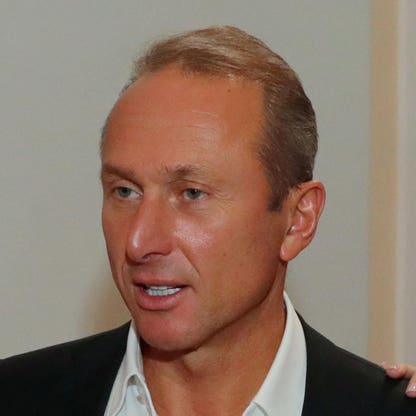
Igor Kesaev's Mercury Group: Inside Russia's Diverse Billion-Dollar Conglomerate
In the high-stakes world of Russian commerce, few names resonate with the scale and strategic depth quite like Igor Kesaev. As the President of the diversified Mercury Group of Companies, Kesaev has meticulously built an empire that spans tobacco distribution, retail, and beyond, cementing his status as a formidable retail magnate and a significant figure whose igor kesaev net worth has consistently placed him among the world's billionaires. Currently estimated at a staggering $4.6 billion, Kesaev's wealth is a testament to nearly three decades of relentless expansion, shrewd acquisitions, and an unwavering vision for market dominance.
Born Igor Albertovich Kesaev on October 30, 1966, in Ordzhonikidze (now Vladikavkaz), North Ossetian ASSR, Kesaev hails from a region known for its strong heritage. His academic journey led him to the prestigious Moscow State Institute of International Relations (MGIMO), a breeding ground for Russia's elite, where he earned a Master's degree. This robust educational foundation, coupled with an inherent entrepreneurial drive, laid the groundwork for a career that would profoundly shape the Russian consumer market.
The Genesis of a Billion-Dollar Empire: From Imports to Diversification
Kesaev's journey into the business world began in 1991, amidst the transformative economic landscape of post-Soviet Russia. He founded his first Mercury Company with a focused strategy: importing much-needed food and alcohol into the newly open market. This initial venture proved to be incredibly successful, providing him with critical insights into consumer demand and logistical challenges within the nascent Russian economy.
However, Kesaev's genius lay not just in identifying immediate opportunities, but in foreseeing future trends and strategically diversifying. From these modest beginnings, Mercury Group rapidly expanded its portfolio. This early success and a keen understanding of market dynamics allowed Kesaev to pivot and expand into new, high-growth sectors. The consolidated turnover of the Mercury Group today is reported to exceed $15 billion, showcasing the monumental growth from its humble origins.
For more detailed insights into Kesaev's early entrepreneurial journey and the strategies he employed, explore From Food Imports to Tobacco King: The Rise of Igor Kesaev's Empire.
Dominating the Tobacco Market: The Megapolis Phenomenon
One of the most defining and lucrative moves for Kesaev and the Mercury Group was their strategic entry and subsequent dominance in the tobacco distribution sector. This expansion led to the creation of Megapolis, a company that would eventually become the largest tobacco distributor in Russia. Under Kesaev's astute leadership, Megapolis achieved an astounding feat, controlling approximately 70% of Russia's vast cigarette market. This level of market penetration is unparalleled and speaks volumes about the group's operational efficiency and strategic partnerships.
The significance of Megapolis was further underscored in 2013 when global tobacco giants Philip Morris and Japan Tobacco International (JTI) acquired a 40% stake in the company for a staggering $1.5 billion. This landmark deal not only validated Megapolis's market value and operational prowess but also injected substantial capital into Kesaev's wider business interests. It was a clear demonstration of how a well-executed strategy could attract international investment and solidify a company's position as a national leader.
Retail Prowess: DIXY and the K&B Merger
Beyond tobacco, Kesaev’s Mercury Group has made deep inroads into Russia's retail landscape, particularly through its controlling stake in DIXY. DIXY established itself as Russia's third-largest food retailer, catering to millions of consumers across the country. What sets DIXY apart, and is a hallmark of Kesaev's strategic thinking, is its robust, vertically integrated logistics network. The group owns 8 state-of-the-art distribution centers strategically located to supply DIXY's extensive chain of stores in key regions.
Furthermore, an impressive fleet of trucks contributes significantly to the optimization of transportation costs and guarantees timely deliveries, ensuring fresh products consistently reach shelves. This attention to supply chain efficiency is a critical factor in maintaining competitive pricing and customer satisfaction in the highly competitive food retail sector.
Kesaev's retail ambitions didn't stop there. In 2019, he orchestrated a pivotal merger that reshaped the Russian retail scene. His Dixy supermarket chain combined forces with Krasnoe & Beloe (K&B), a rapidly expanding chain of alcohol stores. This strategic alliance created one of the largest and most diversified retailers in Russia, offering a broader product range and achieving greater economies of scale. Such mergers are complex, requiring keen negotiation skills and a clear vision for market consolidation, all of which Kesaev evidently possessed.
Beyond Retail: Strategic Ventures and Asset Optimization
The Mercury Group's diversification extends beyond core retail and distribution. Kesaev has demonstrated a consistent ability to identify opportunities in various sectors and make strategic investments, often with a clear exit strategy that maximizes value. In 2005, for instance, he acquired a significant stake in the oil company Sibir Energy. Four years later, he skillfully sold this stake to state-controlled Gazpromneft, demonstrating a savvy approach to asset management and recognizing opportune moments for divestment.
Another notable transaction showcasing Kesaev's asset optimization came in late 2012. Through his group, he sold five of the 75 floors of the distinctive pink-mirrored Mercury City Tower in Moscow to Japan Tobacco International (JTI). At the time, this architectural marvel was recognized as the highest building in Europe. Such a sale not only generated considerable capital but also underscored his group's ability to leverage high-value real estate assets effectively.
The Mercury Group’s portfolio also reportedly includes interests in weapon manufacturing, further illustrating the breadth of its diversification and Kesaev's willingness to operate across distinct, often complex, industries. This multifaceted approach to investment and business development has been a cornerstone of maintaining and growing Igor Kesaev's net worth.
To delve deeper into the components that constitute Kesaev's vast wealth, consider reading Igor Kesaev Net Worth: Unpacking Russia's $4.6 Billion Retail Giant.
The Man Behind the Empire: Igor Kesaev's Vision and Influence
Behind the colossal Mercury Group stands Igor Kesaev, a figure whose strategic brilliance and relentless pursuit of expansion have defined his career. Residing in Moscow, married with three children, Kesaev is known to enjoy heli-skiing and mountain climbing, offering a glimpse into the adventurous spirit that likely fuels his business endeavors.
However, the global political landscape has also impacted prominent figures like Kesaev. In April 2022, he was sanctioned by both the European Union and the United Kingdom, a development reflecting the broader geopolitical tensions. These sanctions can present significant challenges for international business operations and asset management for individuals and entities associated with them.
Kesaev's ability to navigate the complexities of the Russian market, from its early chaotic days to its current consolidated state, demonstrates a rare blend of foresight, tactical execution, and adaptability. His journey from an initial food importer to the head of a multi-billion-dollar conglomerate with interests spanning tobacco, food retail, logistics, and even defense, is a powerful narrative of entrepreneurial success in a challenging environment.
Conclusion:
Igor Kesaev's Mercury Group stands as a powerful testament to strategic vision and market consolidation in modern Russia. From its origins in food and alcohol imports, the conglomerate has blossomed into a diverse empire, particularly dominating the tobacco distribution sector through Megapolis and making significant waves in food retail with DIXY and the K&B merger. Kesaev's consistent ability to identify opportunities, execute complex mergers, optimize assets, and build a formidable logistics infrastructure has been key to the group's impressive growth and his own considerable igor kesaev net worth. His story offers a compelling case study in building vast wealth through relentless expansion and strategic diversification within a dynamic economic landscape.
